
Journal
How to finish with rock salt
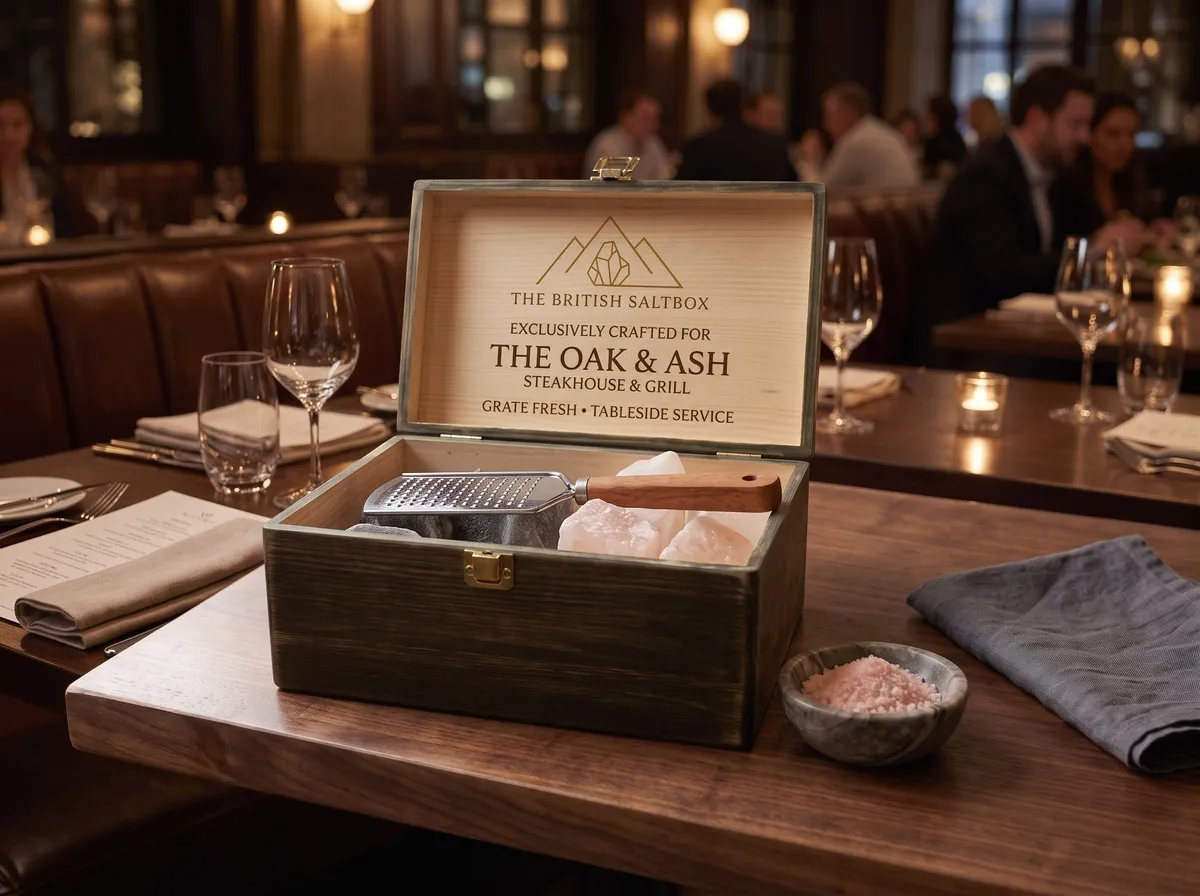
Most of the salt in a good meal never appears. It goes into the water for the beans, into the flour, into the bird the night before. That salt should be plain, fine, and cheap enough that you use enough of it. The salt you can see is a different ingredient.
Rock salt is halite in pieces large enough to notice. A pink chunk from the Salt Range and a clear crystal from Sicily are both sodium chloride. What changes is the size, the speed at which they dissolve, and whether you want a fleck of colour on the food. The mineral note, if you want it, is on The Salt. This page is about the hand.
Break, do not bury. A pestle will turn a handsome crystal into ordinary salt, which rather misses the point of having bought the crystal. Use the wooden grater from the box, the back of a spoon, or your fingers if they are clean and you are not feeding a crowd. You want gravel, not dust. Dust vanishes into the sauce and you will over-salt trying to see it.
Put it on food that is already seasoned. Rock salt on a bland potato is a punishment. Rock salt on a potato that has been cooked in properly salted water is a contrast: soft, then bright. The same is true of tomatoes, cucumbers, roast beetroot, a piece of mozzarella, a rib of steak that has rested. The crystal should be the last thing, after oil, after pepper, after you have decided the dish is nearly done.
Leave it where it will not immediately drown. A pool of dressing dissolves the crystal and you are left with salty water and a story about presentation. Scatter on the drier parts of the plate. If you are serving family-style, put the chunk on the table and let people break their own. That is more honest than pretending you seasoned each leaf.
A few places it does not belong. A custard. A clear broth. A brine, unless you crush it first and accept that you have made fine salt at a foolish price. Bread dough. Anything that will be stirred for ten minutes. Smoke and wild garlic are other ingredients. This shop does not sell a smoked salt or a herb salt to stand in for them.
Keep the piece dry, covered, and away from steam. Salt left open beside the hob becomes a damp stone and then a puddle. A small dish with a lid is the whole equipment.
If you only buy one rock salt to learn this, Personalise a box with pink halite from Khewra, rock from Târgu Ocna, or Sicilian rock — or buy a 1kg rock refill if you already own the box. Taste two of them side by side on the same tomato. You will stop talking about minerals and start talking about lunch. The grater lives in the box.