
Journal
Pink, grey, and black
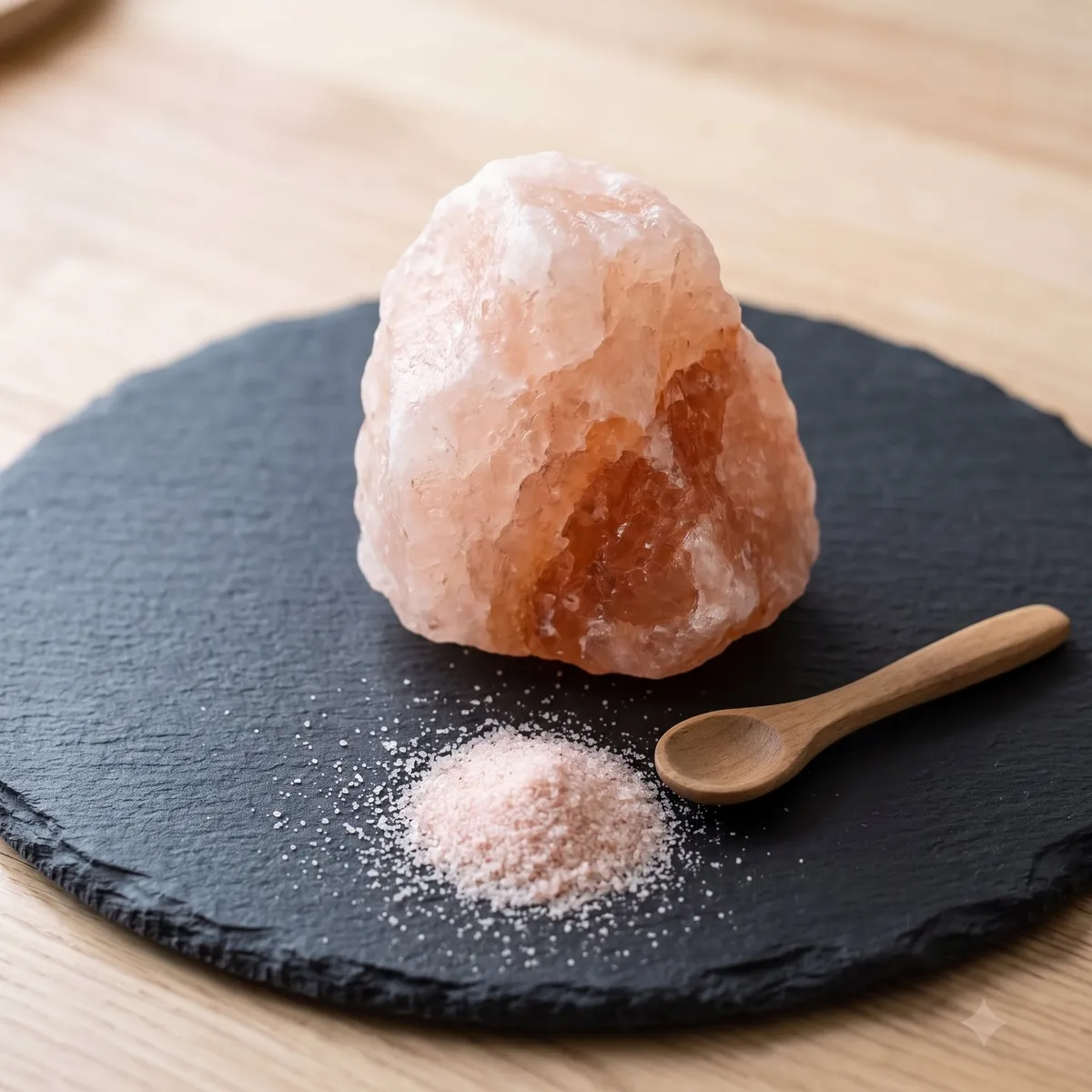
Colour is the first thing a salt is sold on, and the last thing a cook should trust. Pink, grey, and black look like a range. They are different objects, made in different ways, and the names hide more than they tell.
Pink means the halite of the Khewra mine in the Salt Range — the trade name “Himalayan pink” is colour in the crystal, not geography on a map. The crystals are large, dry, and the colour of a washed rose. The taste is salt, with a stony finish if you let a piece dissolve slowly. We sell it as rock inside the box and as rock refills, for the grater, where the colour stays visible on the plate. We also sell it ground, in a paper bag, for the jobs a crystal cannot do: an even seasoning on eggs, the rim of a glass, a dry rub that has to cling. Same salt, two tools. When a lot has an assay, we publish it on Transparency.
Grey is the salt of the Atlantic marshes, sel gris, raked up still damp with a little clay from the floor of the pan. It tastes round, slightly sweet, and less fierce than a dry flake. It likes roast meats and the water you cook potatoes in, if you can bear to spend it that way. It is not the grey in our shop. Ours is Carpathian rock salt from Salina Târgu Ocna in Romania: a dry, mined halite for the grater, with none of the marsh in it. We do not sell sel gris.
Black causes the most confusion, because two quite different salts share the name. Kala namak, the black salt of Indian cooking, is a kiln-fired rock salt with a sulphurous, eggy aroma and a pinkish-grey colour once ground; it belongs in chaat and chutneys, and it is an ingredient in its own right. Black lava salt is something else: sea salt blended with activated charcoal. It is matte, it can mark a white fish grey, and it tastes like salt with a faint bitterness from the carbon. Used with a light hand on goat’s cheese or the rim of a tomato, it is handsome. We sell neither; the journal on finishing will do more for your cooking than a black tin.
White still matters. A finishing flake is white because the crystal is thin and clean. Sicilian rock salt is white because that is the colour of the halite. If your cupboard has room for two salts, make them a flake and a rock on Personalise, and let the colours come later, when you know which dishes are bored.
Blue, here, is Persian blue: a rock salt crystal with a blue cast. Use it by the pinch, the same way you grate pink halite at the table. The note on the mineral is on The Salt; you can choose it as ground salt on Personalise.
The comparison worth making is on one plate. Same tomato, three pinches, thirty seconds. Pink stays. Grey softens. Black marks. The one you reach for again is the one to keep. The essay behind the names is on The Salt. The shop is for the salts we put in your kitchen.